Why Are Modern JavaScript Frameworks Becoming So Similar?
Remember just a few years ago when choosing a frontend framework was like picking a side in a war?
* **Team React:** Praised JSX as a stroke of genius, while detractors called it a "monstrous hybrid of HTML and JS."
* **Team Angular:** Insisted on strong typing and an all-in-one solution, mocked by Vue fans for being "too heavyweight."
* **Team Vue:** Championed the middle ground, balancing ease of use with flexibility.
Community discussions were filled with jabs about language features, architectural philosophies, and tooling.
Fast forward to 2025, and the reality is that the differences between these frameworks are shrinking. Sometimes, you can switch to a new framework and find the developer experience and API style almost seamlessly transferable.
Why is this convergence happening? It's not just a natural evolution of technology; it's driven by developer needs, performance bottlenecks, and a maturing toolchain ecosystem.

---
### 1. The Unified Front on State Management: Signals
Of all the converging trends, the shift in reactive state management is the most significant.
**In the past: Subscriptions & Full Re-renders**
Early React relied on Virtual DOM diffing. A state update would re-execute affected nodes in the component tree, sometimes causing cascading re-renders. While Vue 2.x had fine-grained dependency tracking, its implementation was different, and Angular depended on change detection (via Zone.js) to traverse all bindings.
**Today: The Rise of the Signal Pattern**
A **Signal** is a reactive model with explicit dependency tracking. When a state value changes, it *only* updates the computations or views that directly depend on it, instead of re-running the entire render function.
Here’s the current support landscape:
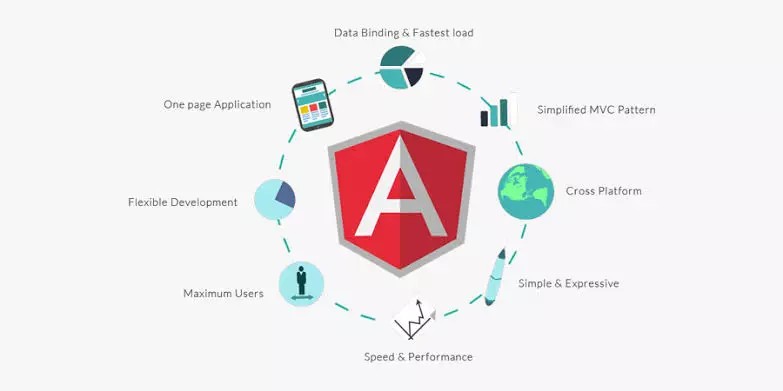
- **Angular 16+:** Officially built-in Signals API.
- **Svelte 5:** Compiler is based on Signals, but it's transparent to the developer.
- **SolidJS / Qwik / Preact Signals:** The early pioneers of the Signal pattern.
- **Lit 3:** Google has also introduced Signals to Web Components.
While Vue doesn't call it "Signals," its `ref` + `effect` system is essentially the same idea. React is the current "exception," but one of the goals of its upcoming React Compiler is to eliminate unnecessary re-renders, which aligns with the philosophy of Signals.
**Why did Signals win?**
* **Performance:** They prevent cascading re-renders, leading to smoother UIs.
* **Simplicity:** The underlying logic is highly reusable and doesn't depend on a Virtual DOM.
* **Clear Mental Model:** The dependency chain is explicit, making debugging easier.
---
### 2. The Complete Unification of Component Philosophy
**Early Divisions:**
* Angular started with "directives," keeping templates and logic mostly separate.
* React championed component functions/classes from the start, mixing logic and view.
* Vue maintained a separation of HTML, CSS, and JS while organizing them in Single File Components (SFCs).

**Today's Consensus:**
Regardless of syntax, the core idea of a component is now universal:
* **Props down:** Data flows from parent to child.
* **Events up:** Children notify parents via callbacks or event bubbling.
* **Lifecycle hooks:** Execute logic at specific component stages.
* **Logic reuse mechanisms:** Hooks, Mixins, Composables, etc.
This dramatically lowers the learning curve when moving between frameworks. For example, switching from Vue to React now means adapting to JSX and Hook syntax, not relearning architectural principles.
---
### 3. The Return of Server-Side Rendering and Hydration
Frontend rendering has gone through several phases:
1. **Early Days:** Primarily Server-Side Rendering (SSR), with minimal client-side interaction.
2. **The Rise of SPAs:** All rendering logic moved to the client, leading to long initial load times.
3. **The Modern Return:** Server-First rendering, with the client activating ("hydrating") interactivity as needed.
Today, nearly all meta-frameworks—Next.js, Nuxt, SvelteKit, Astro, and even experimental branches of Angular—promote an **SSR + Partial Hydration** model.
**The benefits:**
* **Faster First Paint:** The server sends HTML directly, reducing blank screen time.
* **Less JavaScript:** Only the necessary code for interactive parts is sent to the client.
* **SEO-Friendly:** Easier for search engine crawlers to parse.
When debugging this kind of architecture locally, you often need to run multiple services (Node.js, a database, a cache, etc.). Using a local development environment like [**ServBay**](https://www.servbay.com/) lets you spin up all these services at once, saving you the hassle of manually managing ports and dependencies.
---
### 4. File-based Routing as the "Industry Standard"
A few years ago, configuring routes was a chore:
* Manually importing components and writing path maps.
* Wrestling with complex nested routing rules.
The file-system-based routing introduced by **Next.js** changed everything. Your directory structure directly maps to your app's routes, drastically reducing boilerplate.
Now, SvelteKit, Nuxt, Astro, Remix, and others have all adopted this convention. The advantage is clear: **convention over configuration**, which reduces errors and makes the directory structure self-documenting for teams.
---
### 5. Convergence of Performance Optimization Strategies
No matter which framework you use, the common optimization techniques are now largely the same:
* **Code Splitting:** Only bundle the modules needed for the current view.
* **Lazy Loading:** Defer loading components that aren't immediately visible.
* **Tree Shaking:** Remove unused code from your final bundle.
* **Image Optimization:** Automatically serve optimized, next-gen image formats.
This trend means developers rarely need to relearn performance tuning methods when switching frameworks.
---
### 6. The Developer Experience (DX) Arms Race
Another area of convergence is the developer experience (DX):
* **Hot Module Replacement (HMR):** See changes instantly without a full-page reload.
* **First-Class TypeScript Support:** Catch errors early and improve maintainability.
* **Powerful CLI Tools:** Standardize project initialization, building, and deployment.
In this development model, the stability of your local environment directly impacts DX. Using a platform like [**ServBay**](https://www.servbay.com/), which can set up Node.js, PHP, databases, and more with one click, makes cross-language full-stack development much smoother.
---
### 7. The Compiler Wars and Future Trends
In 2024, React introduced the **React Compiler** to automatically minimize re-renders at build time. The new **Runes API** in Svelte 5 is based directly on Signals.
It's clear that **compilers** are the new battleground for frameworks:
* **Automatic performance optimization:** Developers won't need to manually use `memo` or `shouldComponentUpdate`.
* **More granular code generation:** Reducing runtime overhead.
* **Multiple output targets:** The same code could be compiled for the web, native, or even WASM.
---
### Why Are Frameworks Converging?
1. **Performance Bottlenecks:** All frameworks face the same browser limitations and network latency.
2. **Developer Churn:** Reducing the mental overhead of switching frameworks helps grow the user base.
3. **Good Ideas Get Copied:** Community interaction accelerates the adoption of successful patterns.
4. **Unified Toolchains:** The rise of tools like Vite, ESBuild, and Rollup has standardized the underlying build process.
### Takeaways for Developers
* **Concepts Over Syntax:** Understanding reactivity, component architecture, and SSR is more valuable than memorizing a specific API.
* **Master the Toolchain:** Get good with framework-agnostic tools like Vite, TypeScript, and ESLint.
* **Focus on Universal Patterns:** Trends like Signals, file-based routing, and partial hydration are here to stay.
* **Don't Neglect Environment Management:** A reusable, multi-service local environment (like **ServBay**) will save you countless hours when switching projects.
---
### Conclusion
Modern JavaScript frameworks are converging on:
* Signal-based reactivity.
* Component-driven architecture.
* Server-first rendering.
* File-based routing.
* Standardized performance strategies.
* A consistent developer experience.
This means the barrier to entry for switching frameworks will only get lower. The competition will shift more towards raw performance, toolchain integration, and the scale of the ecosystem.
What's the next big innovation? Perhaps the widespread adoption of resumability, or the full realization of compiler-driven optimization. Whatever it is, the trend is clear: a more efficient development process and a more performant user experience for everyone.